Concrete driveways take a beating. Oil drips, tyre marks, leaf stains and black mould all build up over time. A good clean brings them back, and a few habits keep them looking good. None of these take much effort, but together they can easily double the time between professional cleans.
1. Deal with oil and fuel spills fast
Fresh oil soaks into concrete quickly. Cover spills with kitty litter or sawdust, leave it for a few hours, then sweep it up. The sooner you act, the less staining you get. If a car is dripping regularly, park it on the street until it is fixed, or put a drip tray down where it sits.
2. Sweep regularly
Leaves and flowers, especially from poinciana and jacaranda trees, leave tannin stains when they sit wet on concrete. A quick sweep once a week makes a big difference. After storms, clear the piles of leaf litter out of corners and along the edges where they collect.
3. Consider sealing
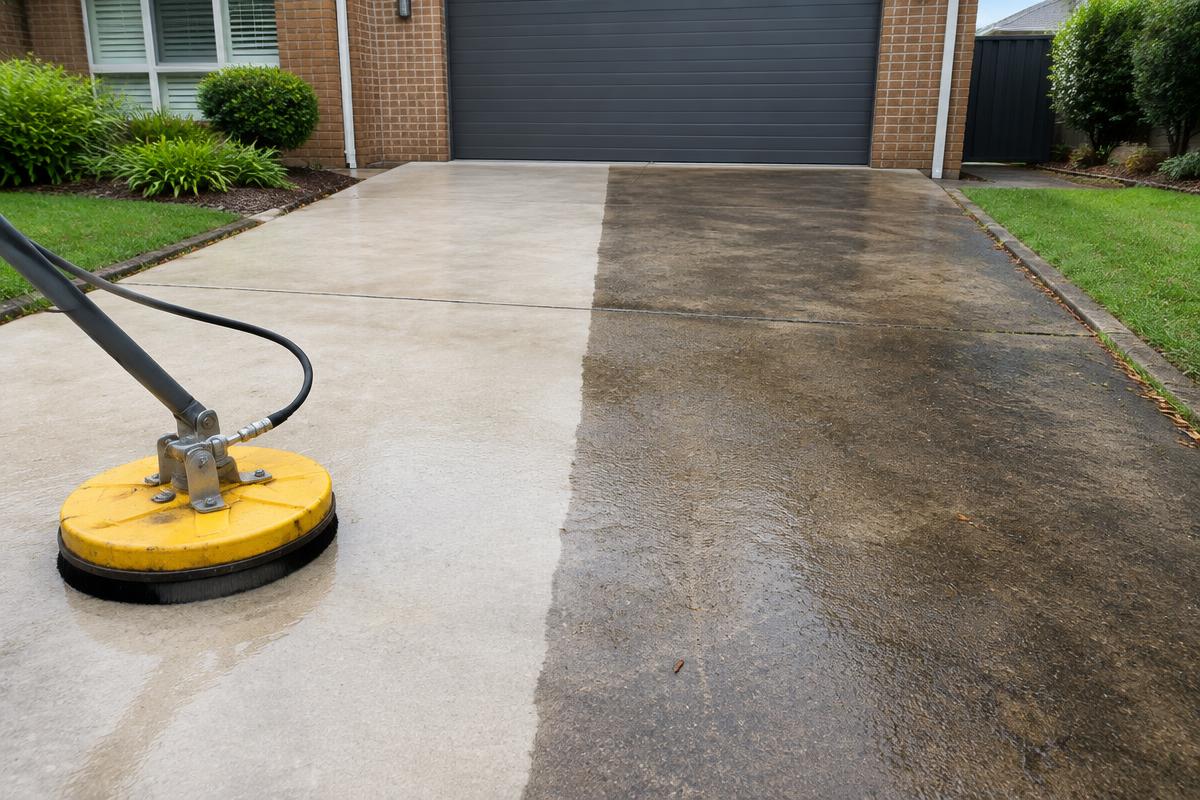
A quality sealer makes it harder for oil, dirt and mould to soak in. It also makes future cleans quicker. Sealing works best straight after a professional driveway clean, when the surface is completely clean. Penetrating sealers keep the natural look of the concrete, while film forming sealers add a slight sheen. Ask which suits your surface before choosing.
4. Fix drainage problems
Water that sits on concrete is the main reason black mould and algae take hold. If part of your driveway stays damp for days after rain, that patch will always go dark first.
- Clear blocked drains so water does not sit on the surface
- Redirect downpipes that spill onto the driveway
- Trim garden beds that shade and keep the concrete damp
- Check that sprinklers are not wetting the driveway every morning
5. Watch the shaded and sloped sections
Shaded areas and sloped sections that stay wet are the first to get slippery. Black mould on a sloping driveway is a genuine slip hazard in the wet, not just a looks problem. If you can see a dark film forming, it is time to book a clean rather than wait for the whole driveway to go.
Most Brisbane driveways look their best with a professional clean every 12 to 18 months. Shaded or sloping driveways that grow black mould may need it yearly for safety.
What about pavers?
Pavers need a little extra care. Weeds and moss grow in the joints, and ants love to mine the sand underneath. After a pressure clean, the joints often need fresh sand swept in to keep the pavers locked in place. If the joints keep washing out, ask about a jointing sand that hardens when wet, which resists both weeds and washout.
Small habits that add up
- Park in the same spot and check under the car monthly for fresh drips
- Hose off muddy footprints and tyre tracks before they bake on
- Keep bins on a slab or tray so leaks do not stain the concrete
- Blow or sweep grass clippings off after mowing, as they stain when wet
None of this replaces a proper clean, but it stretches the time between them and keeps the place looking cared for in between.
Do not forget the paths
Paths, patios and pool surrounds collect the same grime. We can clean them in the same visit as part of our concrete cleaning service. Request a free quote for the lot.